
You can walk on the rugs
On auctions, access, and the cost of someone else’s certainty
im Kinsky Auktionshaus
Dorotheum
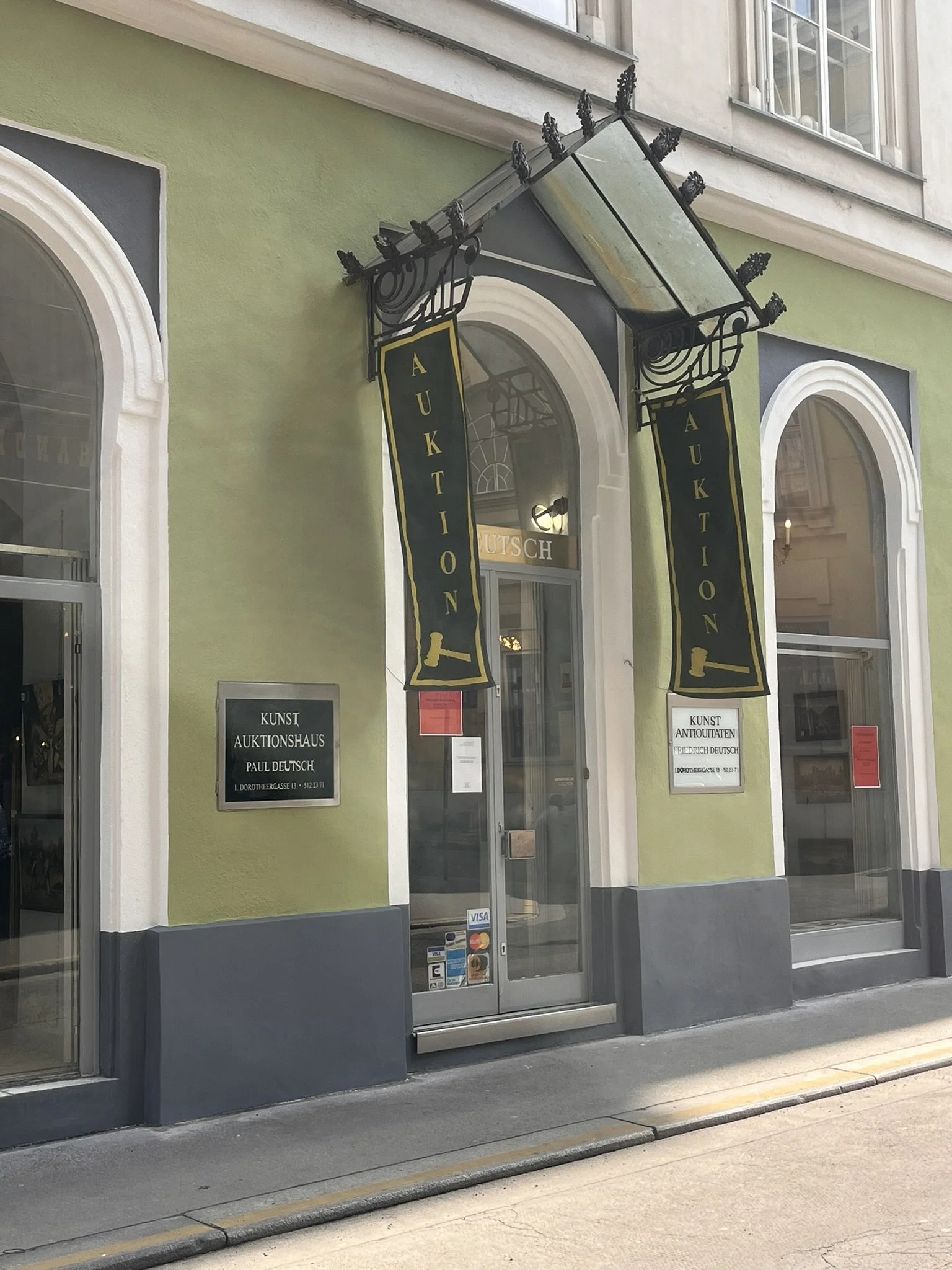
P Deutsche
Auction houses are supposed to feel slightly intimidating.
That’s part of the theatre—especially in cities like London or Paris, where the setting, the language, and the pricing all reinforce a certain distance.
Which is why Vienna feels slightly off-script.
Because the rooms look the part—but they don’t behave that way.
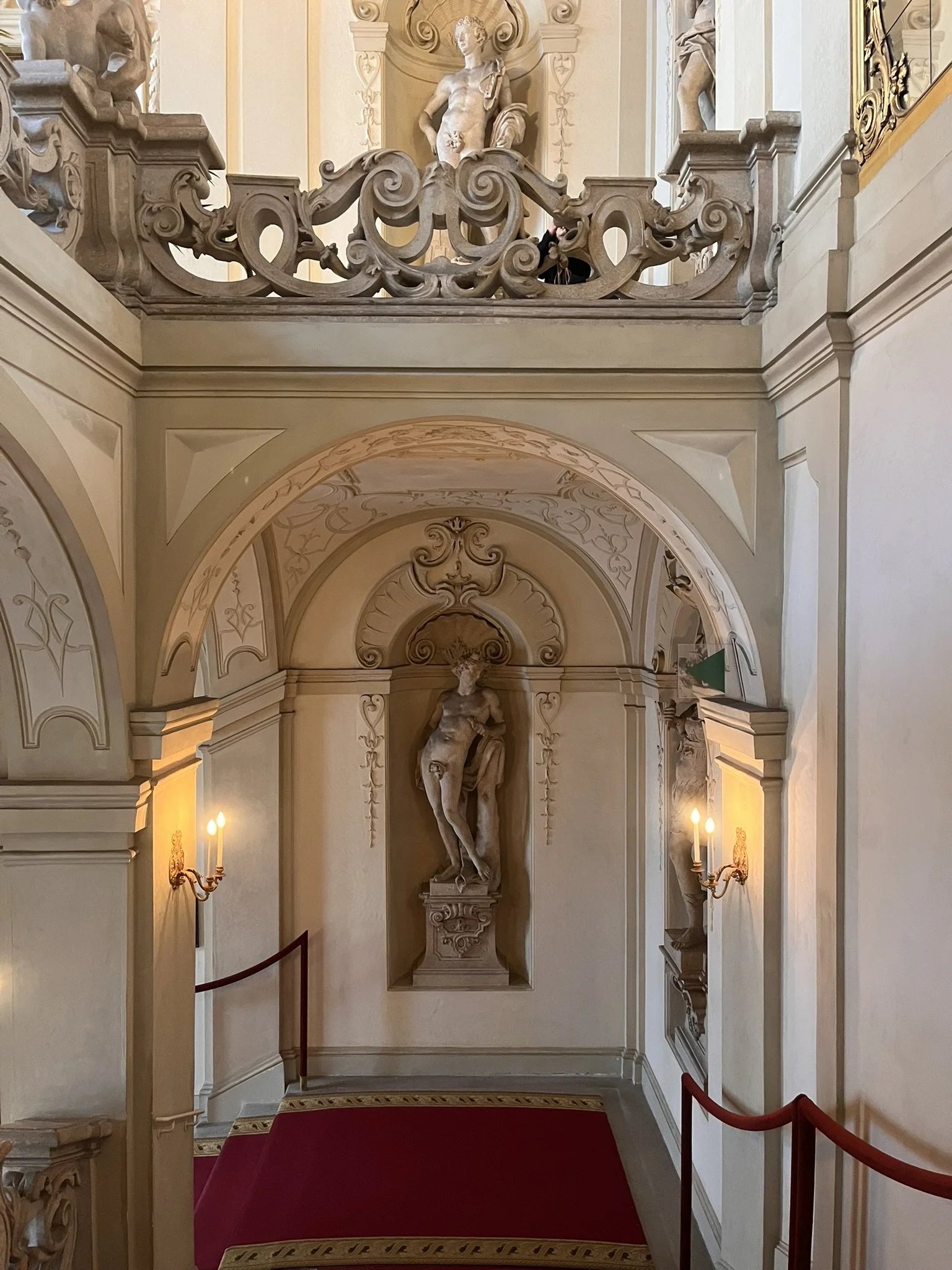
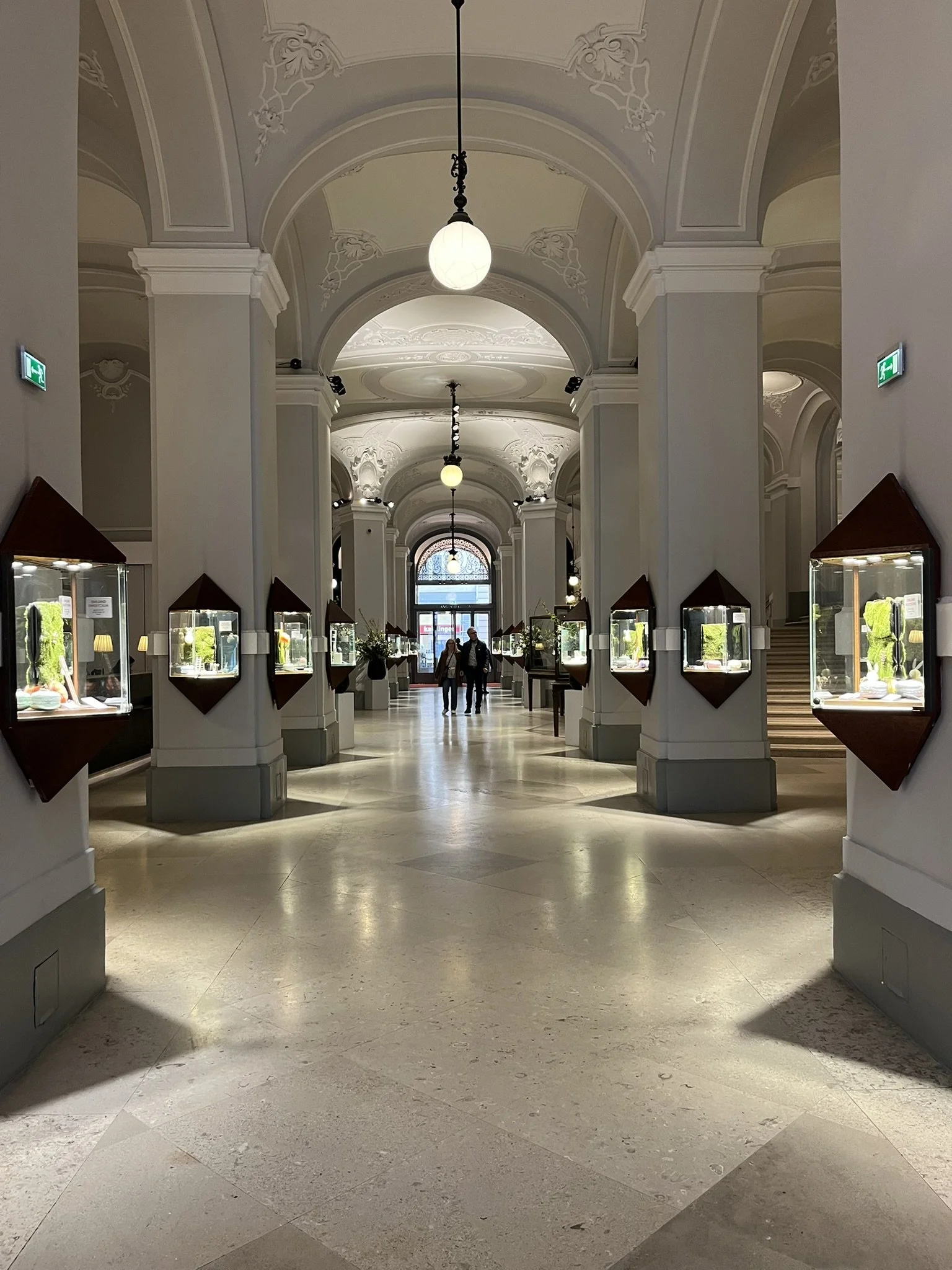
Places like Dorotheum, established by Emperor Joseph I in 1707, are undeniably grand—vaulted ceilings, classical detailing, spaces that feel like they’ve seen several lifetimes of objects pass through them. The kind of setting where you instinctively lower your voice, even if no one’s asked you to.
And yet, you can just walk in.
No ceremony. No choreography. No sense that you need to signal anything about yourself to justify being there.
You can take your time. You can stand close to things—really close—and look without feeling like you’re overstepping.
That shift—from observing to engaging—is subtle, but it changes how you see everything.
I noticed it most when I walked into the exhibition space for the Oriental Carpets, Textiles and Tapestries auction.
There were several laid out on the floor, and I instinctively did that slightly awkward dance around them—half out of habit, half out of not wanting to get it wrong. And then a guard, very casually, just said: you can walk on them.
So I did.
Which sounds like a small thing, but it isn’t.
Because that’s actually how you understand a rug. Not from a distance, but underfoot—how it reads in scale, how the colour shifts as you move across it, how it holds a space.
There was no theatre around it. No sense that you were being granted special access. It was just… normal.
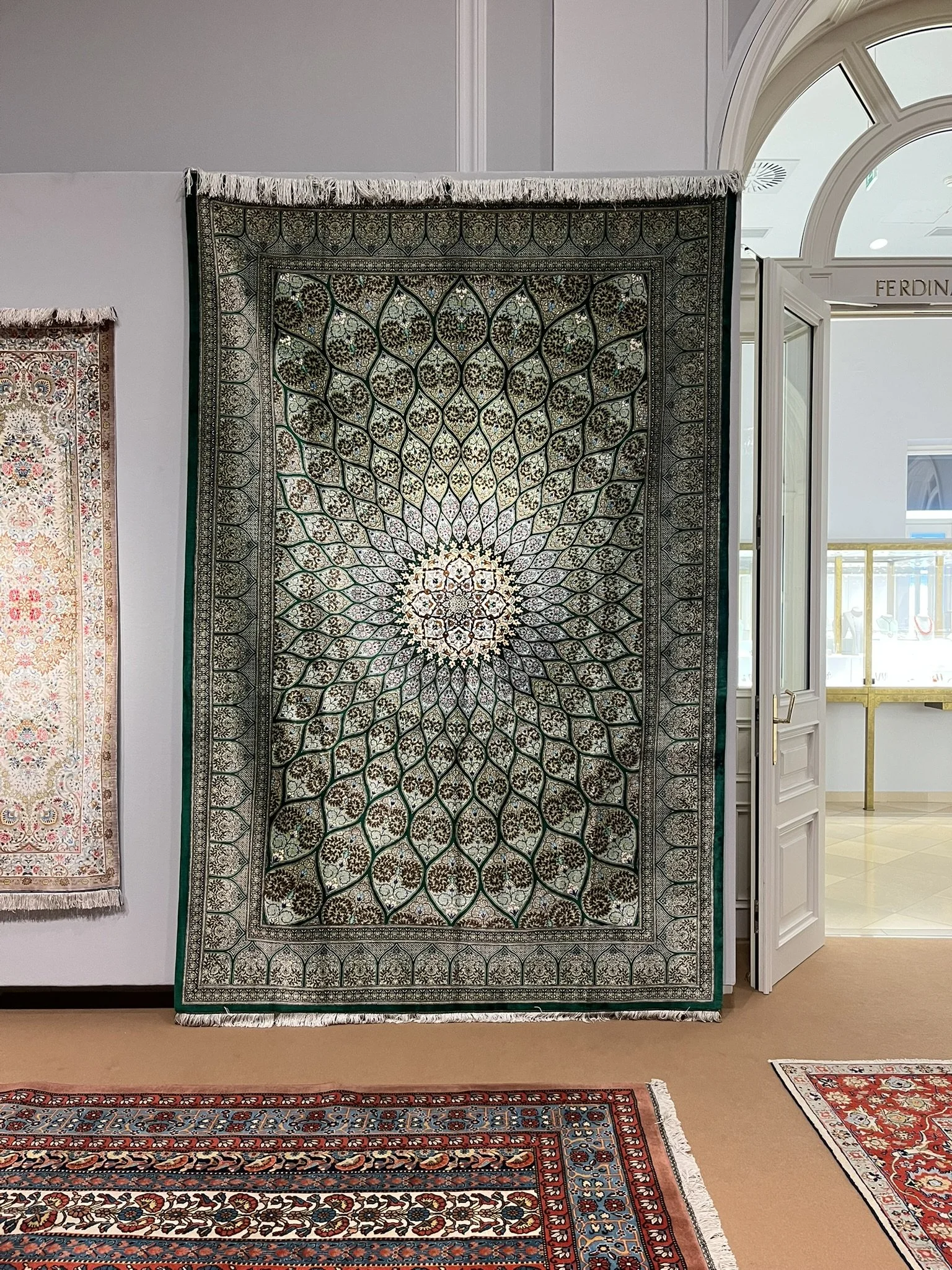
A pure silk carpet manufactured with c. 810,000 knots per square meter
The silk rug I kept going back to sold for what felt like a low number—certainly compared to what it would become once it passed through a London dealer. But standing there, it hadn’t yet been turned into a product. No lighting, no narrative, no reassurance. Just a rug, slightly uncertain of its own importance. That’s the real gap between auction and retail: not quality, but interpretation. At auction, you’re buying the object in its raw state. In a showroom, you’re buying the decision someone else has already made about it.
And that decision can be expensive. It’s not unusual for retail prices to land at many multiples of an auction result—sometimes dramatically so. At a certain point, you start to wonder whether you’re paying for certainty more than for the object itself. There’s a case to be made that, at those levels, a more considered approach—buying closer to the source, accepting a degree of uncertainty, even getting something slightly wrong—isn’t just more economical, but more interesting.
This is where a designer’s role shifts. Not just towards taste-making, but towards navigation—understanding where an object sits in the value chain, what is intrinsic to it, and what has been layered on top. It does involve risk. A dealer will almost always know more about a specific piece. But mistakes happen at every level, including at full retail—and those can be far more costly, because they come wrapped in confidence.
The more compelling interiors, in my experience, tend to come from a willingness to operate a little earlier in that chain. To look before everything has been decided. To take on a bit of uncertainty. Not recklessly, but deliberately.
— Michael Camacho
Research and Design Practice (April 2026)